



An umbrella fails in wind for one of two reasons: the canopy catches air it cannot release, or a rib bends past the point where it can spring back. A hurricane umbrella is simply one engineered against both. Everything else, canopy size, handle, colour, print, is unchanged. That is why a well-built compact can survive a gust that destroys a much larger umbrella.
- A vented double canopy releases wind through the top instead of catching it.
- Fibreglass ribs flex and recover where steel deforms permanently.
- Windproof is a construction claim, not a guarantee against all conditions.
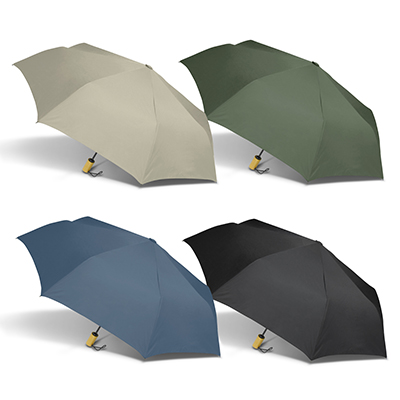
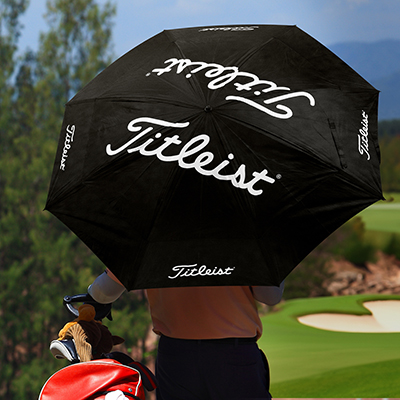
- Vented builds are available in golf sizes for coverage and compact sizes for carry.
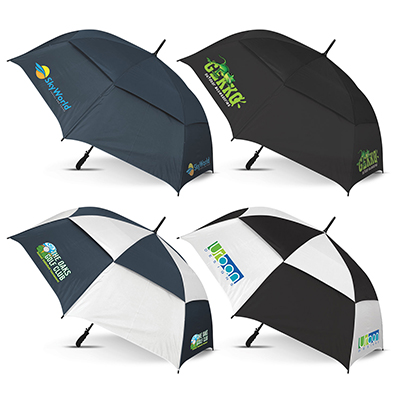
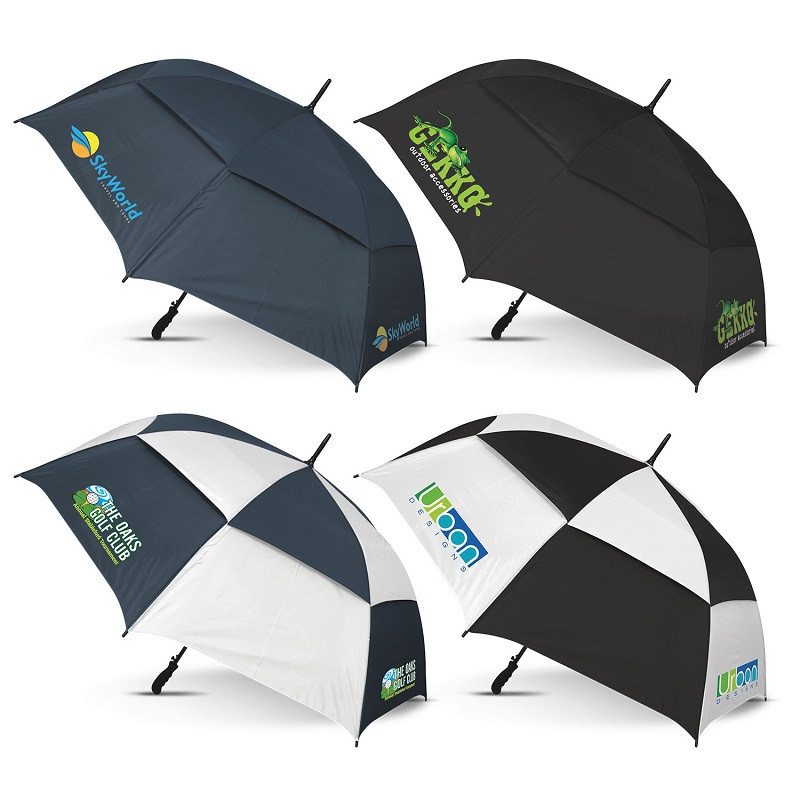
The vented double canopy
Look at the top of a hurricane umbrella and you will see a second, smaller layer of fabric sitting over openings in the main canopy. When a gust hits from below, air passes through those openings and escapes under the upper layer instead of building pressure inside the dome. The umbrella stays the right way up because the wind has somewhere to go.
The upper layer overlaps the vents, so rain still runs off the outside as normal. This is why a vented canopy does not trade weather protection for wind performance, and why it has become standard on serious golf and event umbrellas rather than a novelty.
Fibreglass ribs and frame design
The second half of the equation is the skeleton. Fibreglass ribs bend a long way and return to shape. Steel ribs are stiffer until they reach their limit, then they stay bent. In practice that means a fibreglass frame survives repeated gusts that would leave a steel frame permanently misshapen after one.
- Rib material, with fibreglass preferred wherever wind is expected
- Rib count, where more ribs spread load across the canopy
- Shaft construction, in fibreglass or reinforced metal depending on the style
- Tips and runner, the fittings that take the strain when the canopy flexes
The hurricane umbrella range is built around this combination, and the vented golf styles apply it at full canopy size.
Windproof, storm-proof, showerproof: what the words mean
These terms get used loosely, so it is worth being precise. Windproof describes construction designed to cope with gusts, usually vents plus flexible ribs. Storm-proof is the same idea applied to a heavier-duty build. Neither means indestructible, and no reputable supplier will tell you an umbrella cannot be damaged in extreme conditions.
On water, showerproof and waterproof are not interchangeable either. A canopy sheds rain, but seams, vents and the opening around the shaft are not sealed the way a waterproof garment is. Expect an umbrella to keep you dry in rain, not to behave like a roof in a downpour that lasts an hour.
When a standard umbrella is the right call
Plenty of briefs do not need a windproof build. A compact umbrella that lives in a handbag and comes out for a walk from the carpark to the office is fine as a standard build, and the money is better spent on the fold mechanism or the fabric. Delegate packs, retail giveaways and city-office runs often fall into this group.
Specify a hurricane build when the umbrella will be used somewhere exposed and used often: sporting sidelines, coastal venues, open carparks, marshalling points, outdoor staff, or anything issued to a club that will be out in all weather. If the umbrella is going to be handed to volunteers standing in an open field, the frame is the whole decision.
Branding a vented canopy
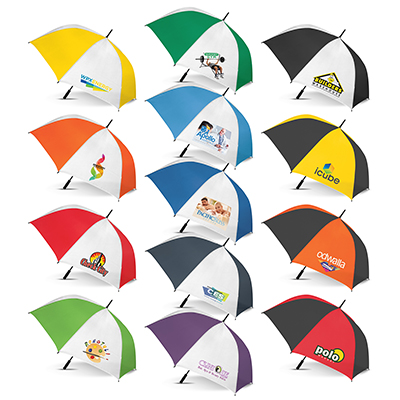
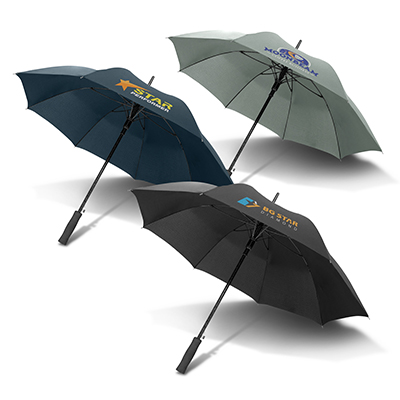
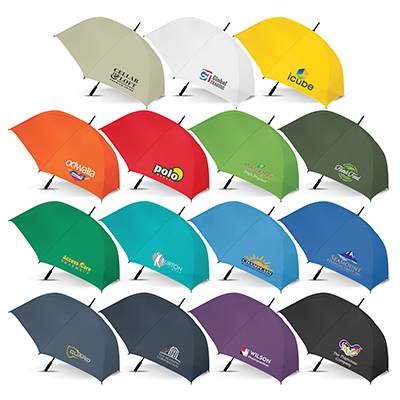
Vents change the print layout slightly, because the usable area on each panel sits below the vent line. It is not a limitation in practice, it just means the artwork is positioned with the vent in mind, and we show that on the digital proof prepared as part of the order process. Screen printing suits bold logos on coloured canopies; sublimation carries detailed artwork on white or light panels.
Minimum order is 25 units per style, and production runs approximately 10 working days from artwork approval, with rush orders accommodated where possible and subject to stock availability.
Common questions
What makes an umbrella windproof?
A vented double canopy and flexible ribs. The vents let a gust pass through the top instead of building pressure inside the dome, and fibreglass ribs bend and return to shape where steel ribs deform permanently.
Are hurricane umbrellas worth the extra cost?
They are when the umbrella will be used somewhere exposed and used often, such as sporting sidelines, coastal venues or open carparks. For an umbrella that lives in a bag and comes out briefly in the city, a standard build is usually the better use of budget.
Is a windproof umbrella guaranteed not to break?
No. Windproof describes construction designed to cope with gusts, not a guarantee against all conditions. A vented, fibreglass-ribbed umbrella will survive far more than a standard one, but no umbrella is indestructible in extreme weather.
Can a compact umbrella be windproof?
Yes. Vented canopies and fibreglass ribs are available on compact frames as well as golf sizes, and a vented compact will often outlast a much larger umbrella built without either feature.
Do vents affect where my logo can print?
Only slightly. The usable print area on each panel sits below the vent line, so artwork is positioned with the vent in mind. This is shown on the digital proof prepared as part of the order process.
Not sure how exposed your site really is? Describe where the umbrellas will be used and we will tell you whether a vented build is worth it, or call 1300 25 60 70.