


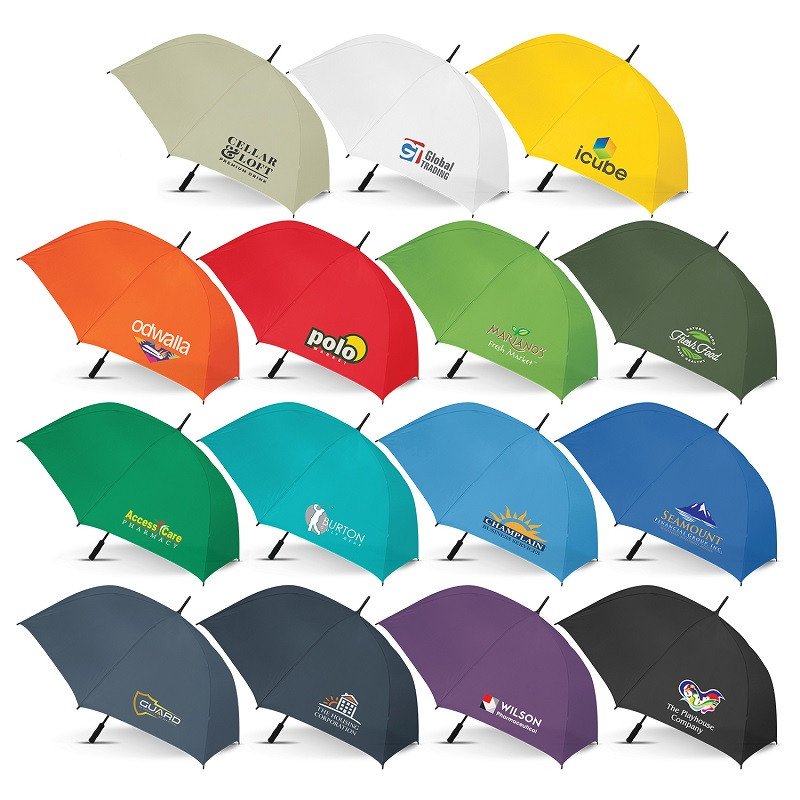
For a café, a branded umbrella is the cheapest square metre of signage you will ever buy. It sits at eye level from the street, it works in daylight without power, and it earns its keep every day the tables are out. The catch is that a café umbrella lives outdoors permanently, so the specification matters far more than it does for a hand-held umbrella.
- Café and market umbrellas typically run from 2.5m to 3m across the canopy.
- The valance is prime branding space because it sits at eye level from the footpath.
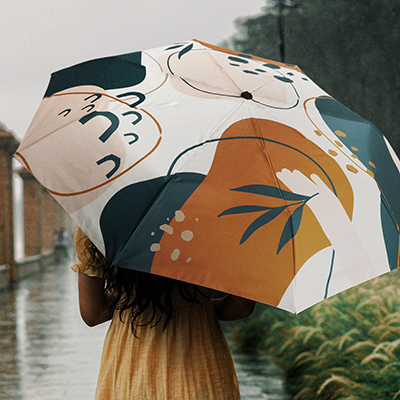
- Full-colour sublimation carries logos, patterns and photographic artwork across panels.
- Check footpath trading rules with your local council before you commit to a size.
What a café umbrella has to do
Three jobs, in this order. It shades a table so people will sit outside. It survives wind, rain and Australian sun without fading or bending. And it tells the street who you are, from far enough away that someone still has time to decide to walk in. A design that nails the third job but fails the second is a false economy, because a faded, wobbling umbrella says something about the venue too.
That is why the frame conversation comes before the print conversation. A market umbrella carries a much larger canopy area than a hand-held umbrella, so the mast, ribs and base all have to be specified for the exposure of your site. A courtyard sheltered on three sides is a different problem to an open corner on a coastal main road.
Sizing: 2.5m to 3m and what fits
Café and market umbrellas are usually described by the span across the canopy rather than by rib length. Common sizes run from around 2.5m to 3m, and the right one is set by your table layout and the footpath you are allowed to use.
| Canopy span | Typically covers | Suits |
|---|---|---|
| Around 2.5m | One table of two to four | Narrow footpaths, tight courtyards, market stalls |
| Around 3m | One larger table or two small tables | Wider footpaths, courtyards, beer gardens |
Two smaller umbrellas often beat one large one: they are easier to handle daily, they fail less dramatically in wind, and they double your branded surface. They also let you cover an irregular space that a single canopy cannot.
Frames, fabric and bases
Ask three questions about construction. What is the mast made of, and does it come apart for storage? How are the ribs attached, and can a single rib be replaced rather than the whole umbrella? And what is holding it down, because a base that is too light is the most common cause of damage on a windy footpath.
On fabric, look for a solution-dyed or UV-stable canopy rated for continuous outdoor use. Australian sun is unforgiving, and a fabric chosen for a hand-held umbrella will look tired outdoors within a season. Ask directly about UV rating and colour fastness, and ask whether the canopy alone can be replaced later, since a re-skin is far cheaper than a new umbrella when your branding changes.
Where the branding goes
The valance, the fabric skirt around the edge of the canopy, is the most valuable strip on the umbrella. It sits at eye level to anyone walking past, it repeats around all sides, and it holds a name legibly at a distance. Panels are the second option and work well for a large logo, a pattern or a full-colour design, but they are viewed at an angle from the street.
Full-colour sublimation is the usual method at this size, because it carries gradients, photographic artwork and edge-to-edge patterns across the fabric. We match your PMS references and prepare a digital proof as part of the order process so you can see exactly where the name will fall on the valance. See the market and café umbrella range for current styles, or printed marquees and gazebos if you also trade at markets and events.
Footpath trading and practicalities
Outdoor dining on a public footpath is regulated by your local council, and the rules differ between municipalities. Permitted area, clearance for pedestrians, height, whether umbrellas may be fixed or must be free-standing, and even colour restrictions in heritage precincts can all apply. Confirm your permit conditions before you order, because the size you are allowed to occupy sets the umbrella size, not the other way around.
Then plan for daily life: who opens and closes them, where they go overnight, and how many spare canopies or ribs you want on hand. Venues that treat the umbrellas as furniture with a maintenance routine keep them looking new for years.
Common questions
What size umbrella is best for a café?
Most venues use a canopy span between 2.5m and 3m. Around 2.5m suits one table of two to four on a narrow footpath, while around 3m covers a larger table or two small ones. Your council permit area usually decides the size before anything else does.
Can café umbrellas be printed in full colour?
Yes. Full-colour sublimation carries logos, patterns, gradients and photographic artwork across the panels and valance. We match your PMS references and prepare a digital proof as part of the order process.
Where should the logo go on a café umbrella?
The valance, the skirt around the canopy edge, is the strongest position because it sits at eye level from the footpath and repeats on every side. Panel printing suits a large logo or a pattern, but it is read at an angle from street level.
Do I need council approval for footpath umbrellas?
Outdoor dining on a public footpath is regulated by your local council and the conditions vary by municipality. Confirm your permitted area, clearances and any height or fixing rules before ordering, because the permit sets the umbrella size.
How long do branded café umbrellas take to arrive?
Production runs approximately 10 working days from artwork approval, with rush orders accommodated where possible and subject to stock availability. Delivery time to your venue is additional, and larger formats are freighted rather than couriered.
Planning an outdoor area? Send us your footpath dimensions and permit conditions and we will recommend a size and layout, or call 1300 25 60 70.